

With a fully equipped 15,000 ft² workshop, we optimize efficiency by using advanced CNC technology to pre-cut timber and precision-machine joinery in a controlled environment. By preparing all timber frame components off-site, we reduce on-site construction time, improve accuracy, and significantly lower the risk of delays.
This streamlined process not only speeds up the building schedule but also reduces material waste and overall project costs.
The result is high-quality, pre-cut timber framing and expertly crafted joinery that deliver superior performance and lasting value for every structure.
We receive our timbers directly from the sawmill in rough-sawn form. The first step in our process is to plane the timbers on all four sides using our in-house automated planing machine, which refines them to a precise dimensional accuracy of 0.5mm.
After planing, the timbers move to our cutting and joinery department. Depending on the complexity and type of timber, the joinery will be precision machine-cut using our CNC machine or hand-cut by our expert timber framers.
Our Hundegger ROBOT-Drive CNC joinery machine uses fully automated software and cutting tools to process the timbers. Our drafting team designs 3D models using CAD technology and exports them directly to the ROBOT-Drive. Before cutting begins, the CNC operator reviews the model and loads the materials. The advantage of CNC technology lies in its speed and precision, cutting timbers with accuracy of 1/32” over 30 feet, saving both time and cost.
While the CNC excels at both traditional and modern joinery, it does have limitations with complex joints or larger beams. In these cases, our skilled timber framers step in.
If a project requires the use of reclaimed timber, such as repurposed beams from an old barn or elevator, they are traditionally hand-cut. Our customer’s desired look and feel of the finished structure is what drives our business, and we have the unique, in-house skills and capabilities to deliver.
There are several methods for connecting timber components in a structure, and the approach chosen depends on the specific requirements of the project. Many timber frame structures combine these joinery techniques to achieve both functionality and visual impact.Wood grade is another critical factor to consider in your project.
We can guide you in selecting the appropriate grade, whether it’s a commonly used #1 grade or a select structural grade. Additionally, we can advise on the use of Mass Timber, either as a preferred option or if structurally necessary.
We will guide you through architectural specifications, load-bearing capacities, span requirements, and structural integrity of the timber frame, based on the project’s engineering analysis and local building codes.
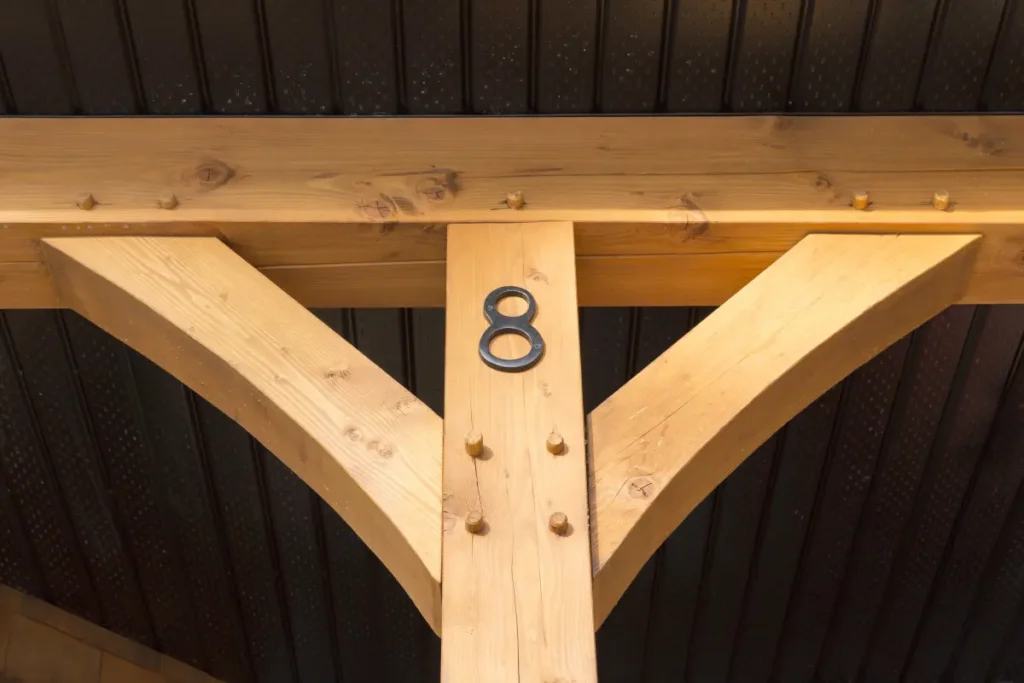
Traditional joinery is the art of Timber Framing. Traditional joinery means jointing timber members together, such as posts, beams, rafters, purlins, etc. without any fasteners or connecters. The only nail that is used is an oak peg in a mortise and tennon connection.
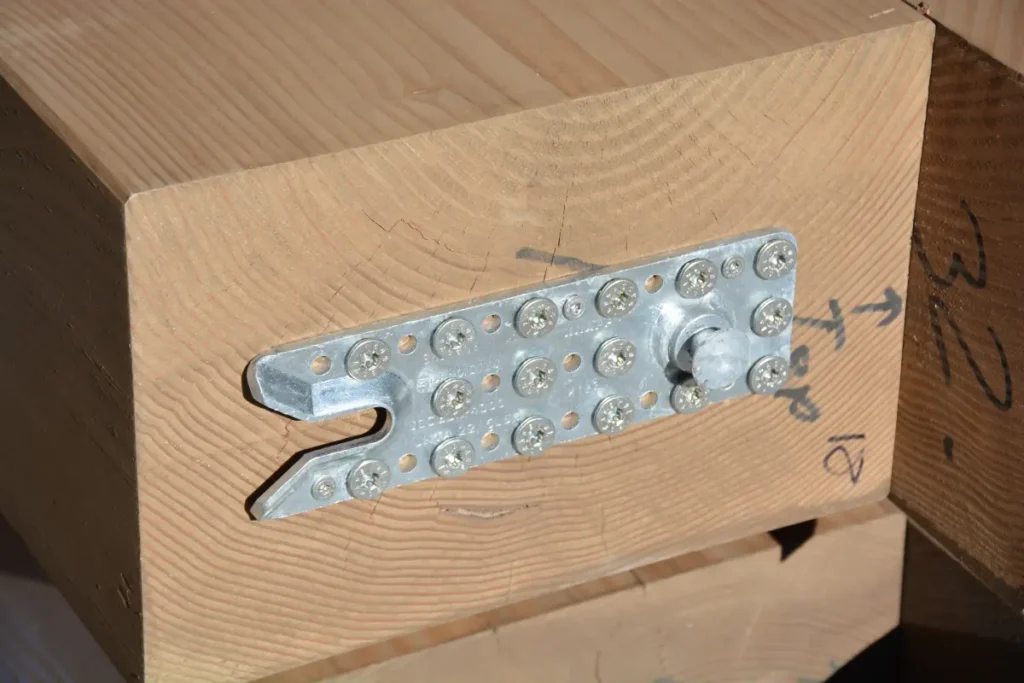
For joints that carry high loads, hidden, pre-engineered, or custom connectors are often used. These may include concealed knife plates, slide-together connectors, or specific bolt and rod details. Hidden connections can bear greater loads and are often easier to engineer than traditional joinery.
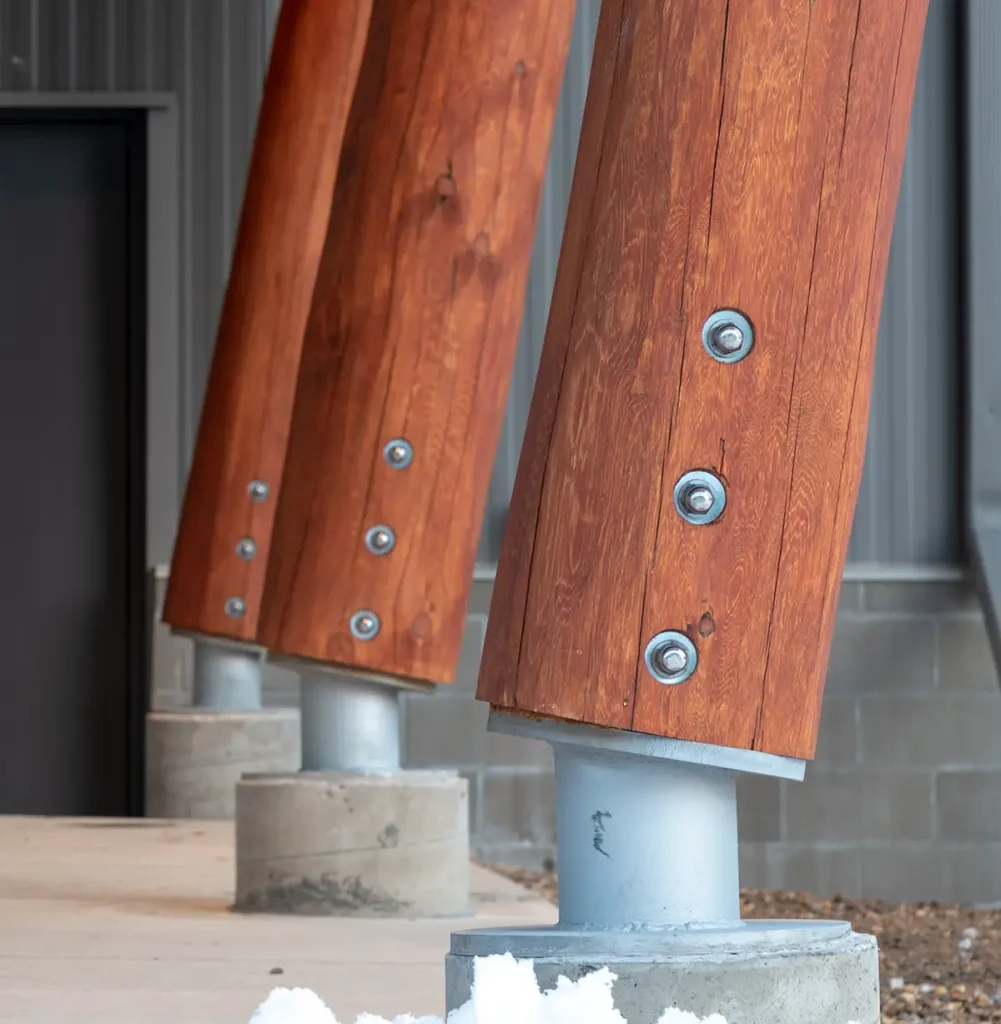
Exposed connectors are often seen in industrial-style structures or designs that aim for a bold, utilitarian look. Exposed connections may be used for structural reasons as well as aesthetic appeal.
Mass Timber systems use engineered connectors, hardware, and fasteners to join wood components, based on engineering specs and dimensions. While traditional joinery may work for smaller structures, modern solutions like slide-together connectors, fasteners, or custom steel connectors are often used for added strength and reliability. Steel cables and bracing are also commonly added to further support the joints.
When designing these connections, our drafting team ensures they meet load-bearing specifications, are visually appealing, and align precisely during installation.
From sourcing to specification, we’ll help you choose wood that’s strong, sustainable, and perfectly suited to your project.
From glulam beams to cross-laminated timber panels, our cutting process guarantees precision, speed, and consistent results on every build.
The components are processed through our Hundegger ROBOT-Drive CNC machine, an automated beam cutting and joinery system that creates precise cuts, joints, and drillings. This machine is designed for high efficiency and exceptional precision, handling both traditional and modern joinery styles.
While our CNC handles most tasks with ease, it has some limitations in terms of complex joints and component dimensions. In these cases, our skilled timber framers step in with hand-cutting and joinery.
To help you understand what to expect, we’ve outlined answers to the most common questions about our journey and CNC cutting. If you have further questions feel free to contact us directly.